Wadena County CPS Faces $1.5 Million Claim Over Child Protection Case led by Margaret Madison
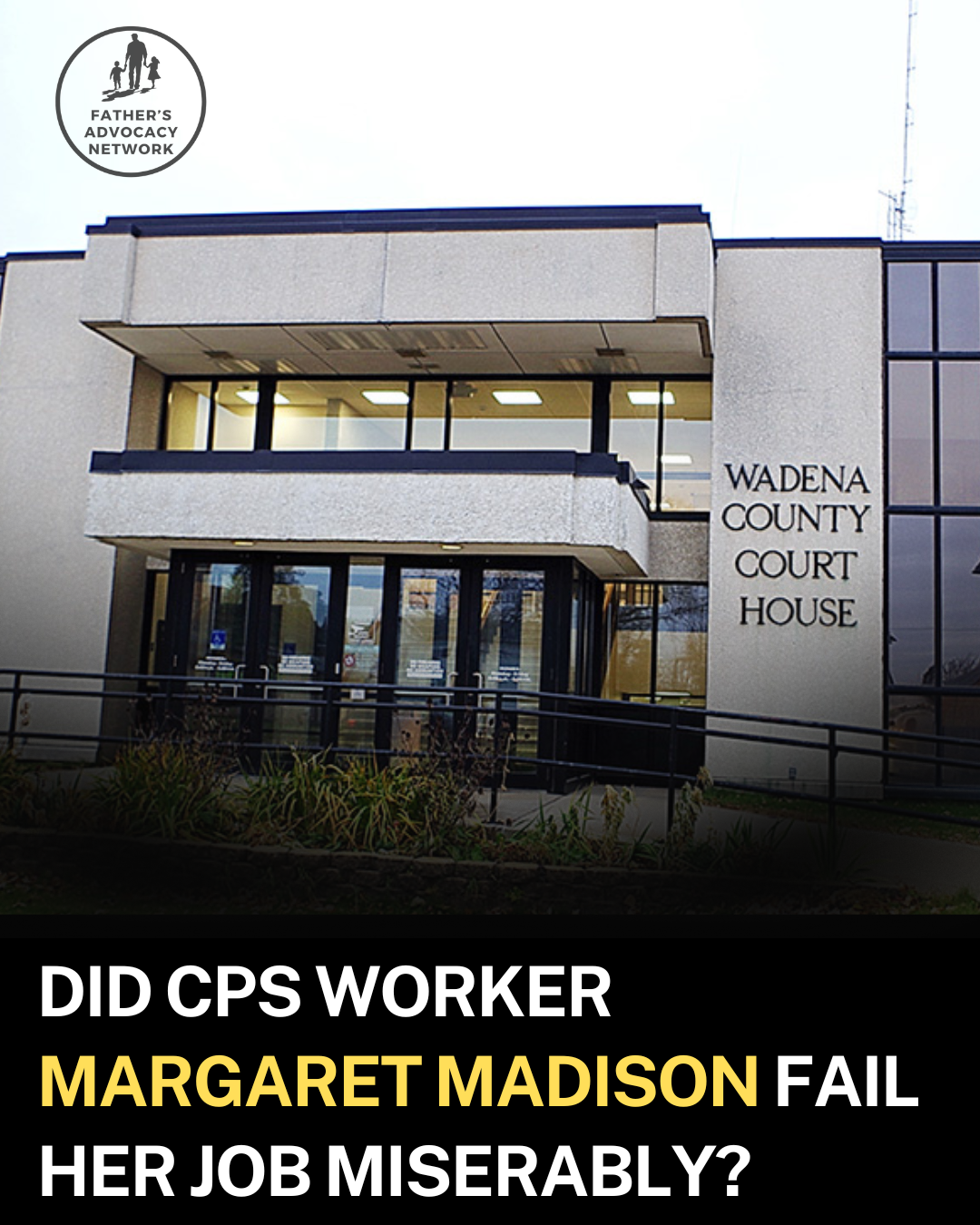
WADENA, Minn. — A Wadena County couple has filed a $1.5 million claim against Wadena County Human Services (often referred to locally as Wadena County CPS) and a county social worker, alleging the county repeatedly failed to properly consider placing their grandchild with relatives during a long-running child protection case.
The claim was sent Dec. 14, 2023, and reported publicly in January 2024. It seeks damages for injury and “ongoing trauma” tied to earlier court proceedings involving custody and permanency decisions for the child.
Who Filed the Claim — and Who Is Named
According to reporting, the claim was submitted by Judith and Richard Flores and targets:
Wadena County Human Services
A county social worker identified as Margaret Madison
A separate publication later described the matter as a lawsuit being pursued for the same amount and against the same parties, though much of that article is behind a subscription wall.
What the Claim Alleges Against Wadena County Child Protective Services
The notice of claim centers on relative placement — the preference in Minnesota child protection for placing children with family when removal occurs, when safe and appropriate.
Key allegations described in the claim include:
Failure to consider the Floreses as a placement option on multiple occasions when the child was moved from foster care.
Failure to document how relatives were considered, which the claim says is required by law and policy.
Claims that the county did not conduct required adoptive-placement comparisons, despite knowing the relatives wanted to adopt.
An allegation of discrimination based on race and national origin, asserting the county chose white families for placement despite the relatives’ requests.
The claim also asserts financial and emotional damages including legal fees, travel costs, lost wages, and ongoing emotional harm.
What a Wadena County Judge Found — and What the Judge Did Not Do
A major reason this case drew attention is that a Wadena County District Court judge (Doug Clark) previously found that Wadena County Human Services and the social worker failed “in several instances” to properly consider placement with the relatives as required by Minnesota statute and Minnesota Department of Human Services policy, according to reporting.
However, the judge did not order the child to be placed with the Floreses.
The court emphasized the best interests of the child and noted the child had spent 1,725 days in out-of-home placement, concluding another move could be harmful. Instead, the court ordered continued visitation with the relatives while adoption proceedings with prospective parents continued.
The Appeals Court Weighed In (April 2024)
A Minnesota Court of Appeals decision filed April 8, 2024 adds major context.
In that case, the child’s grandmother (identified as J.F.) appealed the denial of her motion for adoptive placement, arguing the district court abused its discretion by concluding the child’s best interests favored adoption by non-relative foster parents. The Court of Appeals affirmed the district court.
What the Court of Appeals summarized from the record
The child was born October 1, 2018.
Wadena County started child protection proceedings in November 2018, and initially placed the child with grandmother and her husband.
After multiple events and later maltreatment reports, the child was removed on Dec. 13, 2021.
The appellate opinion also notes the district court issued a “detailed and comprehensive 40-page order” finding the county acted unreasonably in failing to place the child with grandmother for adoption — but still concluded adoption by grandmother was not in the child’s best interests at the time, largely due to concerns about trauma from disrupting the child’s current placement and the child’s special needs.
The Central Tension in Minnesota CPS Cases: “Relative Preference” vs. “Best Interests”
This case highlights a reality that confuses many families watching CPS proceedings unfold:
Relative placement preference can be strongly favored in policy and statute,
but best-interest findings (especially after years in foster care and attachment to current caregivers) can override what relatives believe should happen.
That appears to be the decisive legal hinge in this matter: even where a court found the county’s process was unreasonable at points, the court still concluded moving the child again could cause harm, and adoption remained on track with other caregivers.
Why the $1.5 Million “Claim” Matters — Even Before Any Trial
A notice of claim is often a required step before suing a local government entity in Minnesota. Minnesota’s municipal notice-of-claim statute is codified in Minn. Stat. § 466.05.
That means:
A claim can signal a dispute is escalating into civil litigation,
but it is not the same thing as a court finding liability.
What Wadena County CPS Says (and What’s Publicly Known)
In the reporting available from the Wadena Pioneer Journal article, the key details presented are drawn from:
the submitted claim,
and prior court orders referenced in that claim and in the child protection proceedings.
If Wadena County or the named individuals have issued formal responses in court filings, those responses would typically appear through Minnesota court record systems or subsequent reporting.
What to Watch Next
If this dispute continues beyond the notice-of-claim stage, the next developments that typically become public include:
A civil complaint filed against the county and/or individuals
The county’s answer (denials, defenses, immunity arguments)
Motions to dismiss (often raised early in governmental-liability cases)
Any settlement announcements (sometimes limited in detail)
Because child protection proceedings involve minors, many underlying records remain nonpublic; however, related civil litigation and appellate opinions can be accessible depending on filing type and sealing.
The Larger Foster Care Risk Debate: Safety Assumptions vs. Documented Outcomes
Cases like the Wadena County dispute often unfold within a broader assumption: that once a child is removed from family and placed in foster care, safety is guaranteed.
But decades of federal data and peer-reviewed research complicate that assumption.
1. Children in Foster Care Face Elevated Risk of Abuse
Multiple studies and federal reviews have found that children in out-of-home placements face elevated risk compared to the general child population.
Research frequently cited in child welfare reform discussions has found:
Children in foster care may be 2 to 10 times more likely to experience sexual abuse than children in the general population, depending on placement type and comparison group.
A 1993 study published in Child Abuse & Neglect (Benedict, Zuravin & Stallings) found foster children reported significantly higher rates of sexual abuse than non-foster children.
A 2013 analysis by the National Youth in Transition Database found high rates of victimization among youth aging out of care.
The U.S. Government Accountability Office (GAO) has repeatedly documented that abuse by caregivers in foster placements is underreported and inconsistently tracked across states.
While many foster parents provide safe homes, the data shows that removal itself does not eliminate risk — it shifts it.
2. Child Fatalities in State Custody
Federal Child Maltreatment Reports show that children with prior CPS involvement are disproportionately represented in child fatality data.
Some state-level audits have found child deaths occurring in licensed foster homes or after prior CPS investigations that failed to identify ongoing risk.
The difficulty in tracking foster care fatalities nationwide is itself part of the concern: reporting standards vary by state, and not all deaths in out-of-home placements are publicly categorized the same way.
3. False Allegations and Systemic Overreach
A separate but related issue involves allegations that are later unsubstantiated.
According to federal HHS data:
Roughly 75–82% of child maltreatment reports are unsubstantiated after investigation.
Yet investigations can still involve removal, emergency custody, and prolonged court proceedings.
Families often describe entering the system based on neglect allegations tied to poverty, housing instability, or subjective interpretations of supervision.
When removal is later found unnecessary — or when courts acknowledge procedural failures — the damage may already be done.
4. Drug Testing Concerns in CPS Cases
Drug testing frequently plays a decisive role in removal and reunification decisions.
However, toxicology experts have documented that:
Certain prescription medications (including ADHD medications, antidepressants, and some decongestants) can trigger false positives in preliminary immunoassay drug screens.
Over-the-counter cold medicines containing pseudoephedrine can produce results mistaken for amphetamines.
False positives are more likely when confirmatory GC-MS testing is not performed.
The American Association for Clinical Chemistry has cautioned that screening tests alone should never be used as definitive evidence without confirmation.
In child protection cases, however, preliminary screens sometimes influence immediate removal decisions before confirmatory results are obtained.
5. Neglect: The Broadest Category of Removal
Nationally, approximately 70–90% of removals are categorized as neglect, according to Child Maltreatment Reports.
Neglect can include:
Inadequate housing
Utility shutoffs
Lack of child care
Missed medical appointments
Substance exposure allegations
Inadequate supervision
In many cases, neglect findings intersect directly with poverty-related conditions rather than intentional harm.
Because neglect is broadly defined, determinations often rely on caseworker discretion, risk assessment tools, and interpretations of what constitutes “adequate” care under policy standards. That introduces subjectivity. Two families with similar living conditions can receive different outcomes depending on jurisdiction, agency culture, or the assigned worker.
If removal standards tied to housing instability, food insecurity, supervision gaps, or poverty-linked conditions were applied uniformly across the globe, vast numbers of children in economically strained regions would technically meet removal thresholds.
Critics argue that when poverty is treated as neglect — without first exhausting resource support — family separation can become a substitute for social services.
That tension sits at the center of many high-conflict CPS cases nationwide.
6. Long-Term Outcomes for Youth in Care
Federal and longitudinal studies have also found that youth aging out of foster care experience disproportionately high rates of:
Homelessness
Incarceration
Unemployment
PTSD and depression
Educational disruption
These outcomes do not prove foster parents cause harm; many children enter care already traumatized.
But they do challenge the idea that foster placement alone resolves instability.
Why This Matters in the Wadena County Case
In the Wadena County dispute, a judge found procedural failures in how relatives were considered.
Even though the court ultimately ruled based on “best interests,” the underlying concern remains: when systems do not follow statutory safeguards, the consequences ripple outward.
If a child spends years in out-of-home placement, attachment bonds form.
If procedural errors delay relative placement, reunification becomes harder.
If oversight fails, risk increases.
Once removal occurs, the burden of safety shifts entirely to the state and its approved caregivers.
That burden is enormous.
And the public has a legitimate interest in asking whether it is being met consistently.
About This Coverage
This article is a journalist-style summary of publicly available reporting and court opinions concerning a claim involving Wadena County CPS / Wadena County Human Services and a child protection case. It does not allege guilt or liability beyond what is described in cited sources.
For readers seeking broader context on how families experience high-conflict systems, our organization also trains advocates on communication, documentation, and decision-making under pressure.
Sources
Wadena Pioneer Journal report on the $1.5M claim (Jan. 10, 2024).
Independent News Herald / Verndale Sun summary item (Feb. 6, 2024).
Minnesota Court of Appeals opinion (filed Apr. 8, 2024) summarized via Justia.
Minn. Stat. § 466.05 (Minnesota Revisor of Statutes).
Wadena County official Child Protection page.