Judge Jeff Hughes Exposes Systemic Corruption in Family Court: A Warning Parents Cannot Ignore

Photo Credit: The Advocate
A Veteran Judge Sounds the Alarm
When a 47-year legal veteran describes a court system as “the worst thing I’ve seen in my entire legal career,” it demands attention.
That is exactly what Judge Jeff Hughes, former Chief Justice of the Louisiana Supreme Court, did in a multi-page written report and correspondence to state legislators regarding the East Baton Rouge Family Court.
His findings are not emotional complaints. They are procedural, structural, and legal critiques—documented after formal review and observation—detailing how family court has drifted from its lawful purpose into a coercive, revenue-driven system that routinely harms parents and children.
These documents confirm what thousands of parents nationwide have been saying for years.
“Family Law Has Been Turned on Its Head”
Judge Hughes states plainly:
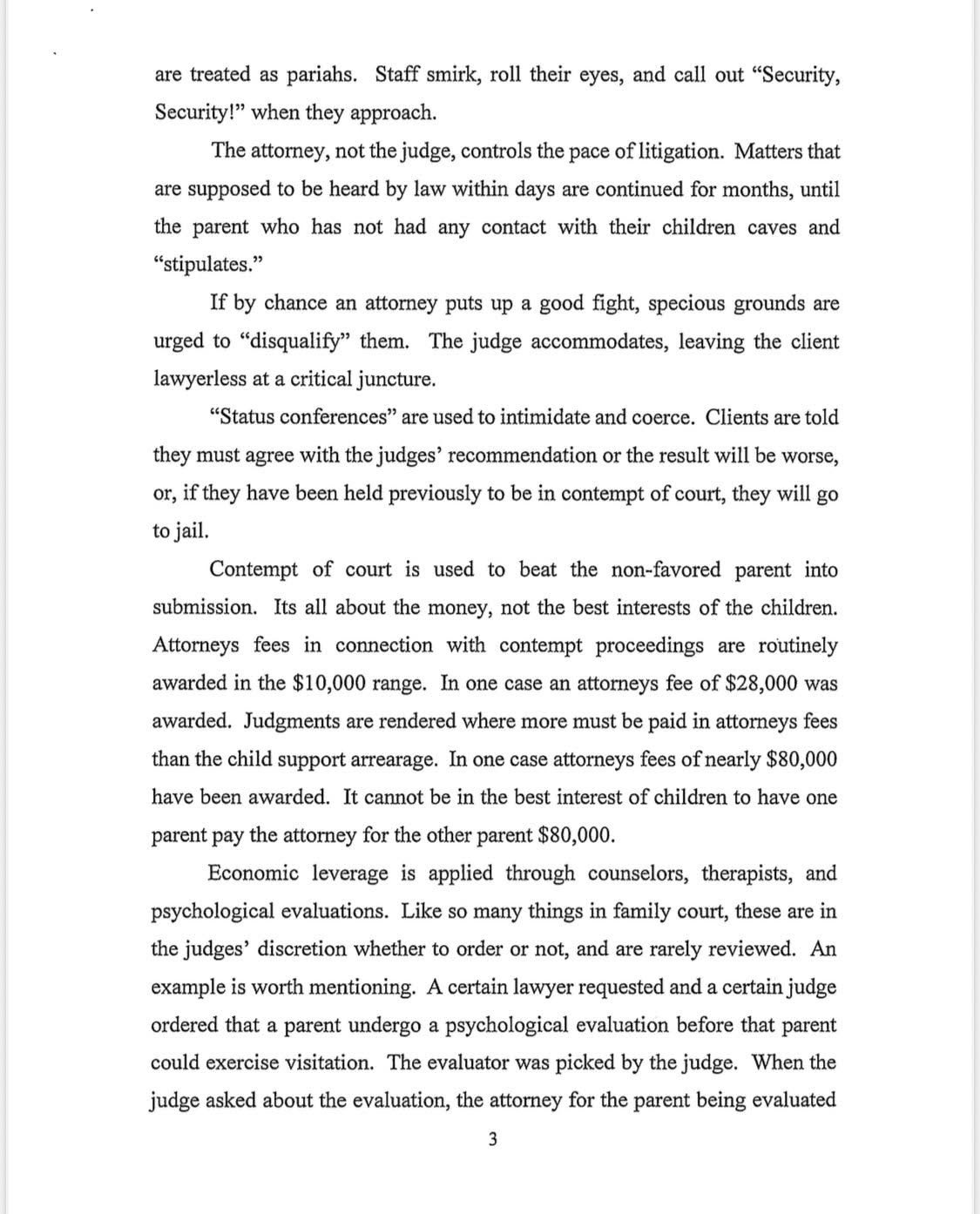
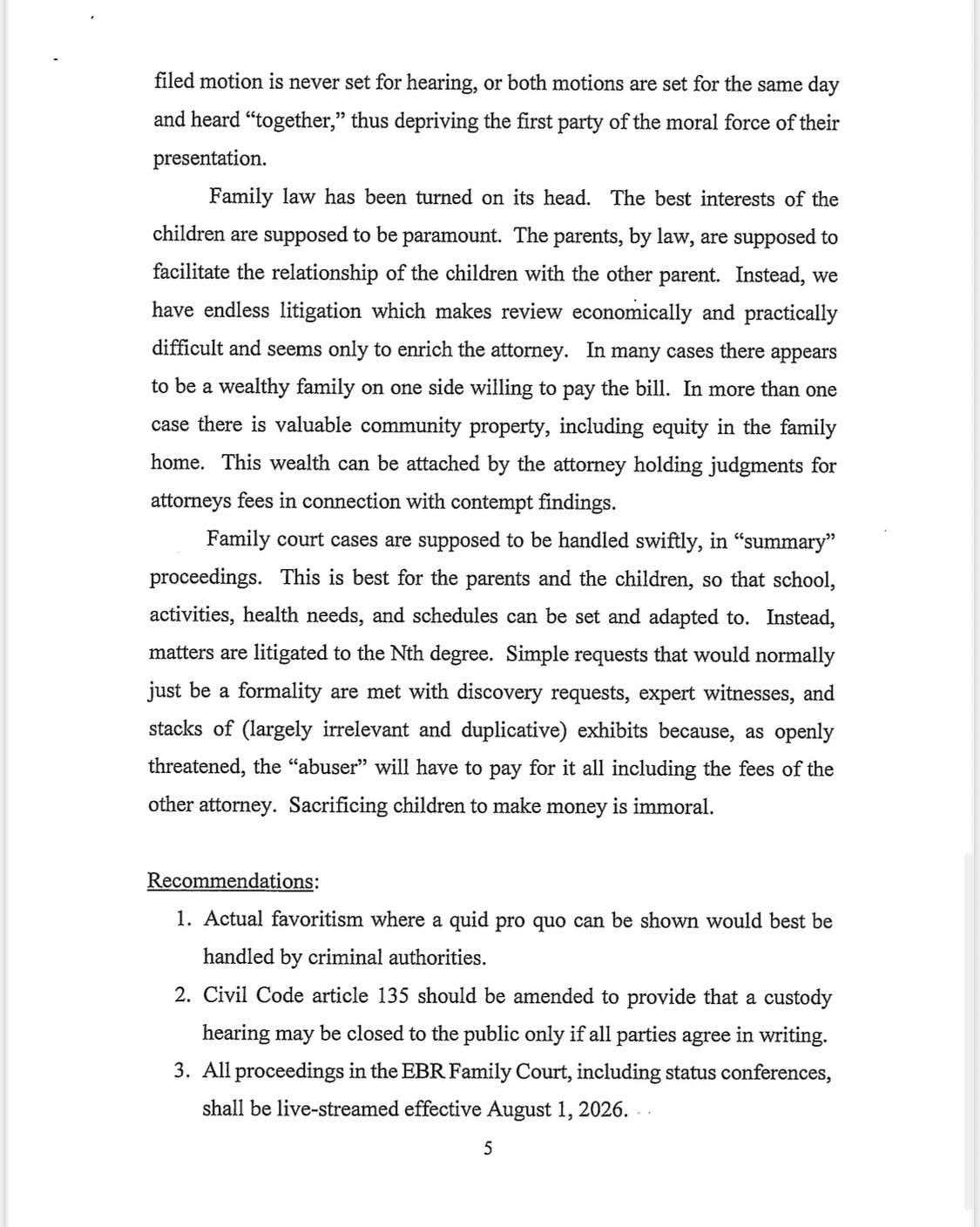
“Family law has been turned on its head. The best interests of the children are supposed to be paramount… Instead, we have endless litigation which makes review economically and practically difficult and seems only to enrich the attorney.”
This is a devastating indictment.
Family court was designed to be:
Swift
Limited
Child-focused
Protective of due process
Judge Hughes documents that it has become the opposite.
The Weaponization of Contempt of Court
One of the most alarming themes in Judge Hughes’ findings is how contempt proceedings are routinely used as economic and psychological weapons.
What the documents show:
Contempt motions are filed strategically, not to enforce compliance but to financially exhaust the “non-favored” parent
Attorney’s fees in contempt cases are routinely awarded in the $10,000–$80,000 range
In some cases, attorney fees exceed the alleged child support arrearage
Once labeled an “abuser,” a parent is legally forced to pay both sides’ experts, evaluations, and attorney fees
Judge Hughes concludes:
“Contempt of court is used to beat the non-favored parent into submission. It’s all about the money, not the best interests of the children.”
False Abuse Allegations as Leverage
The documents outline a deeply troubling pattern:
Abuse labels applied without evidentiary hearings
Psychological evaluations ordered before visitation is allowed
Evaluators selected by the court or opposing counsel
Parents told they must “comply” or risk jail
Judge Hughes warns that once the abuse narrative is established, the content of evidence no longer matters—only procedural boxes being checked.
This mirrors what many CPS-involved parents experience:
Accusations first
Evidence later (or never)
Compliance replacing adjudication
Closed Courtrooms and Coercion
Judge Hughes documents systematic isolation tactics:
Courtrooms closed without proper legal justification
Family, friends, journalists, and legislators ordered out
Parents threatened with jail outside public view
“Status conferences” used to coerce agreement under threat of punishment
“Another tactic is the closing of the courtroom to isolate and intimidate.”
Transparency—the cornerstone of justice—is intentionally removed.
Attorneys, Judges, and the “Club”
One of the most explosive sections of the report addresses actual favoritism, not just public perception.
Judge Hughes documents:
Judges and family law attorneys socializing before and after court
Decisions made during informal meetings where alcohol was served
Certain attorneys “never losing” before certain judges
Litigants being warned by attorneys not to pursue cases because outcomes were predetermined
“While public perception of favoritism exists, I believe the line has been crossed into actual favoritism.”
That statement alone should have triggered a national investigation.
Illegal Transcript Fees and Financial Exploitation
Judge Hughes also identifies statutory violations:
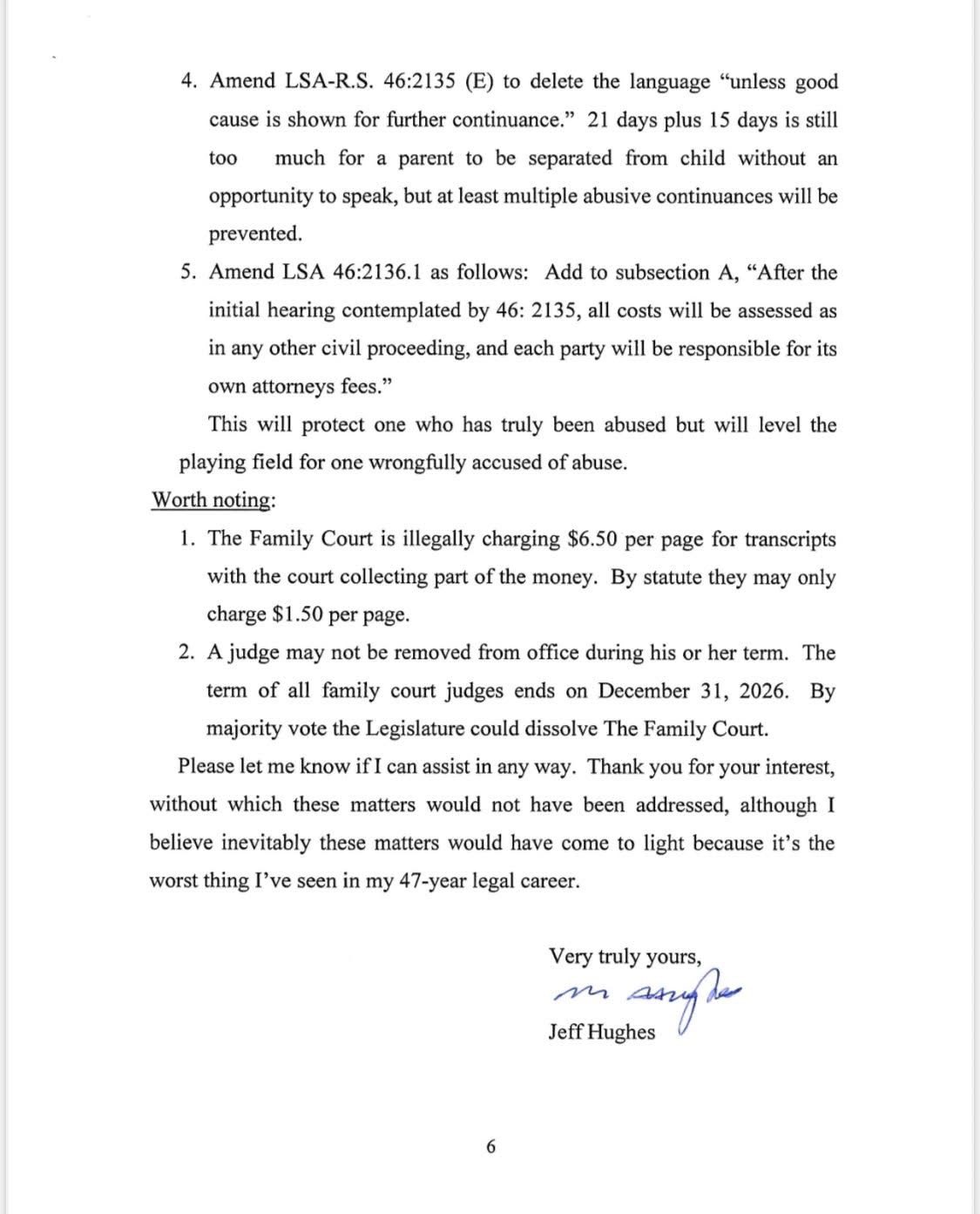
Family Court charging $6.50 per page for transcripts
State law allows only $1.50 per page
The court itself collects part of the money
This is not administrative error. It is illegal enrichment.
Why This Matters Beyond Louisiana
Although Judge Jeff Hughes’ findings focus on East Baton Rouge Family Court, the patterns he describes align precisely with complaints across the U.S.:
CPS referrals feeding family court
Mandatory services creating financial dependency
Parents punished for asserting rights
Compliance rewarded, resistance penalized
Children used as leverage
What Hughes documented is not an anomaly.
It is a template.
Structural Incentives That Reward Harm
Family court and CPS systems are funded and sustained by:
Case volume
Service referrals
Court-ordered evaluations
Prolonged litigation
Judge Hughes states plainly:
“Sacrificing children to make money is immoral.”
That sentence should haunt every policymaker in America.
His Recommendations: Transparency and Accountability
Judge Hughes called for:
Criminal investigation where quid-pro-quo favoritism exists
Public access to custody hearings unless all parties agree otherwise
Live-streaming all family court proceedings
Transparency is the enemy of abuse—and the system knows it.
Why Parents Need to Read This
Judge Jeff Hughes did what few insiders ever do:
He documented it
He signed it
He submitted it to lawmakers
He put his reputation behind it
These are not anonymous complaints.
They are written findings from the highest levels of the judiciary.
If you are involved in family court or CPS—or know someone who is—this is not just relevant.
It is essential.



Final Thought
When a judge with nearly five decades of legal experience says the family court system has become coercive, immoral, and financially predatory, the question is no longer “Is there a problem?”
The question is:
How long will we keep ignoring it?