Breckdell’s Foster Care Story: 23 Homes, Repeated Abuse, Medication Harm Allegations—and Why the System Still Isn’t Safe
Breckdell entered foster care at age 2. He says he remained in “the system” until age 15, cycling through roughly 23 foster homes and about 15 group homes. He estimates that 75–80% of those placements involved some form of abuse.
His story is brutal not because it’s sensational—but because it’s predictable: placement instability, weak oversight, children harmed by other children in congregate care, retaliation fears when survivors seek accountability, and medication decisions made without meaningful safeguards.
This is what “child protection” can look like when a system is built to manage cases instead of protect kids.
What Happened to Breckdell: A Timeline of Instability and Harm
Taken at age two, moved without explanation
Breckdell’s earliest memories are fragments—police lights, urgency, confusion. He recalls being placed in a rural foster home in Northern California where, at first, life felt freer and safer.
Then came a pattern he says defined his childhood: moves with no clear explanation.
“I have no reason why… one of those days they decided to… pick me up and move me.”
“If I ran, the cops brought me back”
In one placement, Breckdell describes abuse escalating after the “show face” phase ended. He says he attempted to run away multiple times—but was repeatedly returned by law enforcement to the very environment he was fleeing.
This matters because it highlights a deadly system failure: when a child tries to escape danger, the response too often is compliance enforcement, not safety investigation.
A childhood trained out of him: “Stop being a baby”
Breckdell says he learned not to cry by age six or seven—not through maturity, but through punishment.
Now at 32, he describes emotional shutdown as a survival skill foster care forced into him: attachment becomes dangerous when you’re moved every year, and weakness becomes a liability when adults punish pain.
The System-Wide Pattern: Placement Instability Is Not “A Side Issue”
Research consistently links placement instability to worse behavioral and mental health outcomes for children in foster care.
Even when placements change for “administrative reasons,” the impact on a child is the same: disrupted attachment, disrupted schooling, disrupted identity.
Breckdell’s account reflects what the data warns about—instability doesn’t just happen alongside trauma. It can become a trauma multiplier.
“The Abuse Was Mostly Other Kids”—And Staff Looked Away
Breckdell describes sexual abuse and violence as often coming from older foster youth in homes and group settings—especially where supervision was nominal.
He described group home staff being “there” but disengaged—socializing, gossiping, and in some cases, he says, provoking fights for entertainment.
This matches a known risk reality: congregate care environments can heighten vulnerability (runaways, trafficking risk factors, peer-on-peer violence) when staffing quality, training, and oversight are weak.
A child cannot “self-advocate” their way out of a system that keeps placing them where harm is structurally likely.
Sibling Separation: “They split us up”
Breckdell says he and his siblings were separated across placements and locations.
Sibling separation is common in foster care, and research has found links between separation and placement instability, which can compound harm.
Even when agencies claim separation is unavoidable, the downstream costs are real: kids lose the last familiar bond they have.
The Most Alarming Claim: Psychotropic Medication and Lasting Harm
One of the most serious parts of Breckdell’s interview is his allegation that a medication decision permanently altered his life.
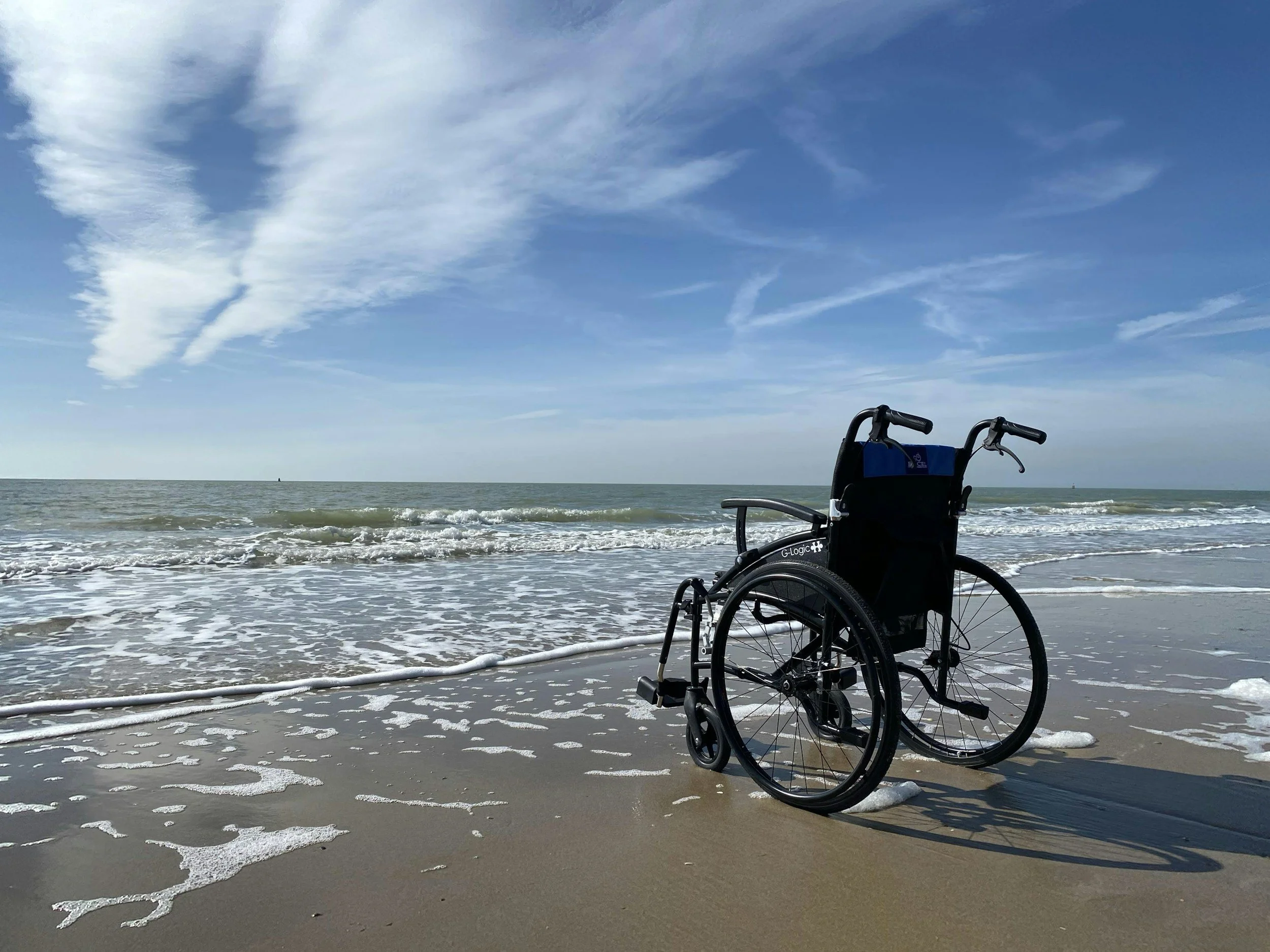
He says that at age 11, he was placed on Zoloft (sertraline)—and within about a week he began losing balance. He says his condition worsened until he became wheelchair-bound by age 12, not due to paralysis but due to severe balance loss.
To be clear: this article is not diagnosing or proving causation. It is reporting Breckdell’s claim and the broader policy issue it raises—foster youth are disproportionately exposed to psychotropic medication, including complex regimens, and oversight has been a long-running concern.
And yes—loss of balance is listed among potential adverse effects reported for sertraline in drug references.
The bigger question is the one the system rarely answers:
Who approved it?
What diagnosis justified it?
What monitoring occurred?
What happened when side effects appeared?
Where is the accountability trail?
When a child’s entire life trajectory changes after a medication decision made under state custody, “we followed procedure” is not an acceptable moral response.
“If You Go After Them, They Go After Your Kids”
As an adult, Breckdell says he considered legal action related to the alleged medication harm and system negligence. But he backed off after a lawyer warned him about a pattern she claimed to have seen:
When clients pursue accountability against the foster system, the system retaliates by targeting their children.
Whether or not that warning is universally true, the fact that survivors believe it could be true is itself a devastating indictment. A system that claims to protect children cannot operate in a way that makes parents afraid to speak.
Accountability collapses when fear becomes policy.
What Breckdell’s Story Exposes About Foster Care
1) “Safety” can become paperwork-based instead of reality-based
Children can be fed, housed, and still be unsafe. “Minimum compliance” is not care.
2) Placement churn destroys attachment and stability
Instability isn’t a bureaucratic inconvenience. It is a developmental injury.
3) Congregate care can normalize peer-on-peer harm
If staffing is disengaged, the strongest kids dominate and the weakest pay.
4) Psychotropic medication decisions demand stricter safeguards
Foster youth face elevated rates of psychotropic prescribing compared to peers, and “oversight” too often means after-the-fact documentation.
5) Fear of retaliation silences whistleblowers and survivors
A system cannot reform if the people it harmed are too afraid to speak.
Why Father’s Advocacy Network Shares Stories Like This
We exist to help families and professionals see what’s happening clearly—not sentimentally, not politically.
Part of that is public exposure. Another part is equipping parents with court-safe insight tools that help reduce misinterpretation, bias, and distortion under pressure. (We use the Core Values Index framework to help document communication patterns and stress behaviors in a structured way.)
If You’ve Lived This: Breckdell’s Message to Others Still in the Fight
Near the end of the interview, Breckdell offered a message that matters:
Even if it feels like your individual story won’t change anything—telling the truth creates dominoes. One story becomes two. Two becomes a pattern. Patterns become reform pressure.
He’s right.
And the system depends on silence.
The Songs He Couldn’t Speak — Trauma Told Through Music
Some experiences are too violent, too layered, and too overwhelming to explain in ordinary language.
Breckdell told us there are parts of his foster care experience that he has never been able to describe in normal conversation. The abuse, the violence, the instability, the deaths, the system failures — they were too vivid.
Instead, he shared two multi-part songs that he says come closer than anything else to capturing what happened.
“Elmo Blanket in Lodi” (Part I & II)
This two-part piece recounts a placement in Lodi, California when he was five years old. What began as one of the only moments of warmth and belonging in his childhood ended in extreme domestic violence and trauma.
The song details:
Exposure to lethal domestic violence in a foster home
Alleged failures of CPS documentation and investigation
Removal without meaningful trauma response
A child returned to prior placements after witnessing bloodshed
It confronts a painful child welfare reality:
When foster placements are approved without thorough screening and oversight, children in state custody can be placed directly inside violent environments.
The title image — an “Elmo blanket” — becomes symbolic of a five-year-old trying to survive in a system that filed his trauma away as paperwork.
“Bang Bang Rosary” (Part I & II)
The second set of songs shifts to his later childhood in emergency placements and group homes in Southern California.
It recounts:
Emergency foster housing conditions
Exposure to gang recruitment pressures
Youth violence
A shooting involving his closest friend
The psychological aftermath carried into adulthood
But the second half turns toward fatherhood.
The final movement is not about violence — it is about breaking cycles.
It is about a former foster child becoming a present, protective father.
It is about refusing to let state failure define the next generation.
Why This Matters in the Child Welfare Conversation
These songs are not entertainment.
They are testimony.
They illuminate systemic issues that researchers and reform advocates continue to raise:
Foster care placement instability
Inadequate screening of foster homes
Group home supervision failures
Trauma minimized in official documentation
Sibling separation
Lack of long-term mental health accountability
When survivors speak through art, it often exposes what official reports leave out.
And whether someone agrees with every detail or not, the larger truth remains:
Children in foster care experience trauma at rates far exceeding the general population.
Oversight gaps do exist.
And long-term harm can follow children into adulthood.
Breckdell’s songs are his way of naming what the paperwork never fully captured.
They are not written for sympathy.
They are written for clarity.